Crystals have fascinated people for thousands of years. Some are completely transparent, while others appear white, pink, purple, green, or even black. They are found naturally inside rocks, deep underground, and sometimes in ordinary places where we might not expect them.
What makes crystals interesting is that two stones can look completely different while belonging to the same mineral family. A purple amethyst and a pink rose quartz, for example, are both varieties of quartz.
Crystals also have a long association with spirituality, meditation, and traditional beliefs. Many people collect them for their beauty, while others are interested in the meanings attached to their colors and natural formations.
But what exactly is a crystal? How many different types are there? And what is the difference between quartz, amethyst, and other gemstones?
What Is a Crystal?
A crystal is a solid material whose atoms, molecules, or ions are arranged in an orderly, repeating structure.
This internal arrangement is responsible for many of its physical properties and can influence the shapes that naturally form as the crystal grows.
Not every crystal is a gemstone, and not every gemstone is a single crystal. Salt and sugar, for example, can form crystals, although we normally associate the word with attractive minerals found in nature.
Quartz is one of the most familiar examples. It is made of silicon dioxide (SiO₂), a compound containing silicon and oxygen.
Pure quartz is colorless, but natural impurities, microscopic inclusions, and changes within its crystal structure can produce different colors.
This explains why quartz is found in several varieties, each with its own name.
How Many Types of Crystals Are There?
There is no single number because the word “crystal” describes a physical structure rather than one particular mineral.
Thousands of naturally occurring mineral species are known, and many can form crystals. Some minerals have several recognized varieties based on their color, appearance, or internal features.
When people talk about different types of crystals, they are usually referring to gemstones and collectible minerals such as quartz, amethyst, fluorite, calcite, and selenite.
These materials belong to different mineral families, even though they are commonly grouped together in crystal shops.
Different Types of Quartz Crystals
Quartz is especially interesting because it can appear in so many colors. Some of its varieties are transparent, while others have a cloudy or opaque appearance.
1. Clear Quartz
Clear quartz, also called rock crystal, is the transparent and colorless variety of quartz.
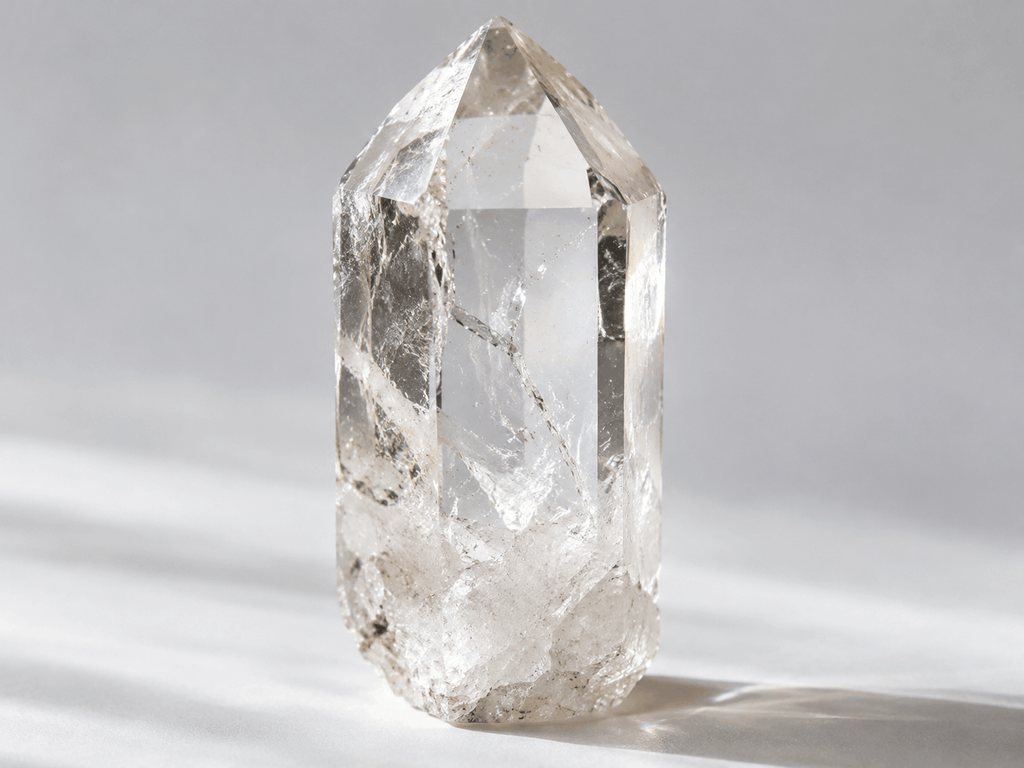
It often forms six-sided crystals ending in pointed tips. High-quality specimens can look almost like glass, although quartz is a naturally occurring mineral with a different internal structure.
Clear quartz has been used for decorative objects, jewelry, and carvings for centuries.
Traditional spiritual meaning: Clarity, concentration, and the amplification of intentions.
2. Milky Quartz (White Quartz)
Milky quartz is one of the most recognizable white crystals.
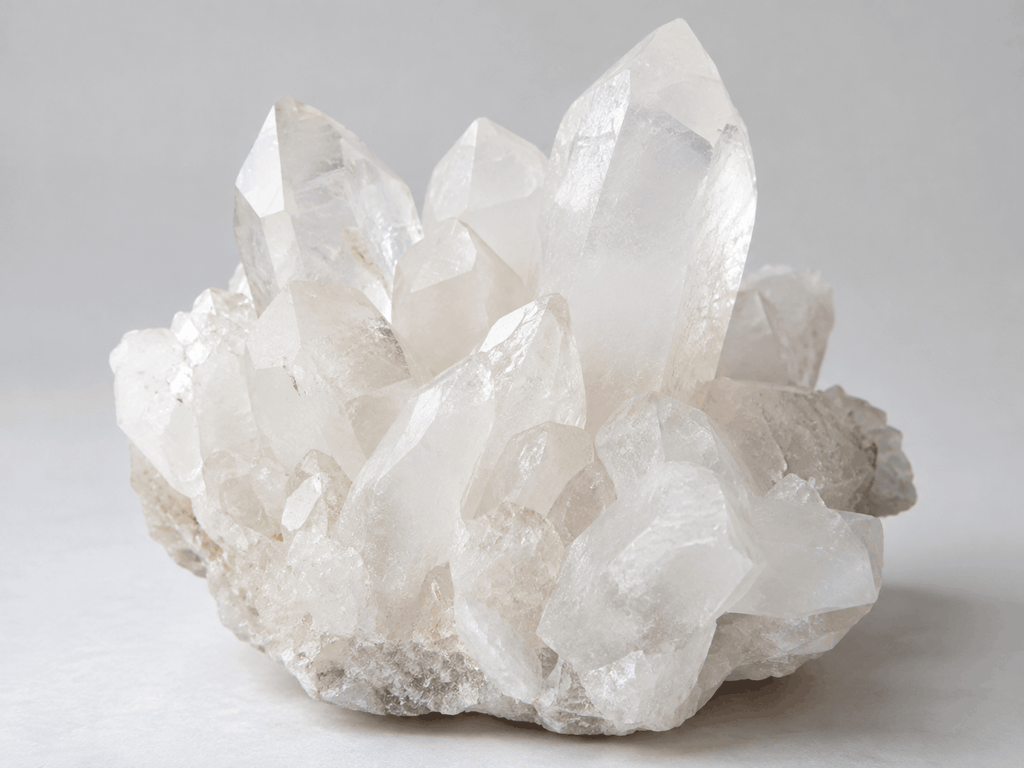
Unlike clear quartz, it has a cloudy, whitish appearance. Tiny internal inclusions, often including fluid-filled cavities, scatter light and make the mineral look milky.
It may be translucent or nearly opaque.
Milky quartz is sometimes called snow quartz, although terminology can vary between sellers.
Traditional spiritual meaning: Peace, emotional balance, and purity.
It is important to understand that not every white crystal is quartz. White calcite, selenite, and certain varieties of feldspar can have similar appearances.
3. Amethyst (Purple Quartz)
Amethyst is the purple variety of quartz and one of the most recognizable gemstones in the world.
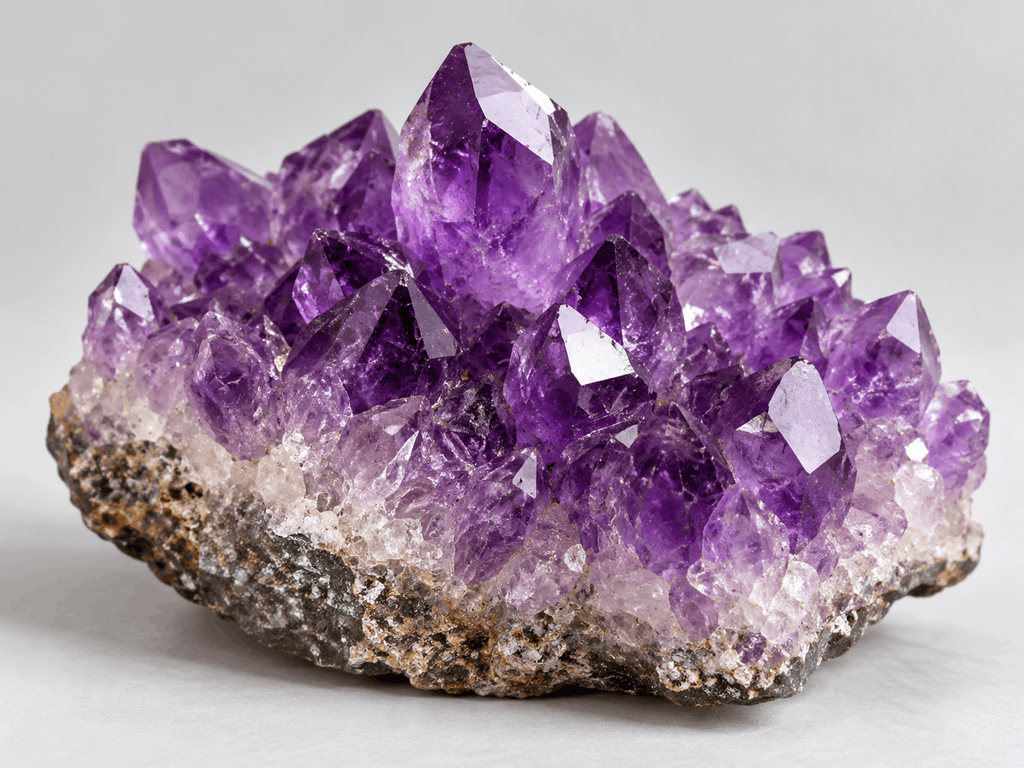
Its color can range from pale lavender to deep violet. The purple coloration is associated with trace iron and natural irradiation that produces changes in the crystal structure.
Amethyst frequently grows in cavities inside rocks, where clusters of purple crystals can develop over geological time.
Historically, amethyst was associated with protection against intoxication. Its name comes from an ancient Greek word meaning “not intoxicated.”
Today, it is widely used in jewelry, decorative pieces, and crystal collections.
Traditional spiritual meaning: Wisdom, protection, calmness, and spiritual awareness.
4. Rose Quartz (Pink Quartz)
Rose quartz is known for its soft pink color.
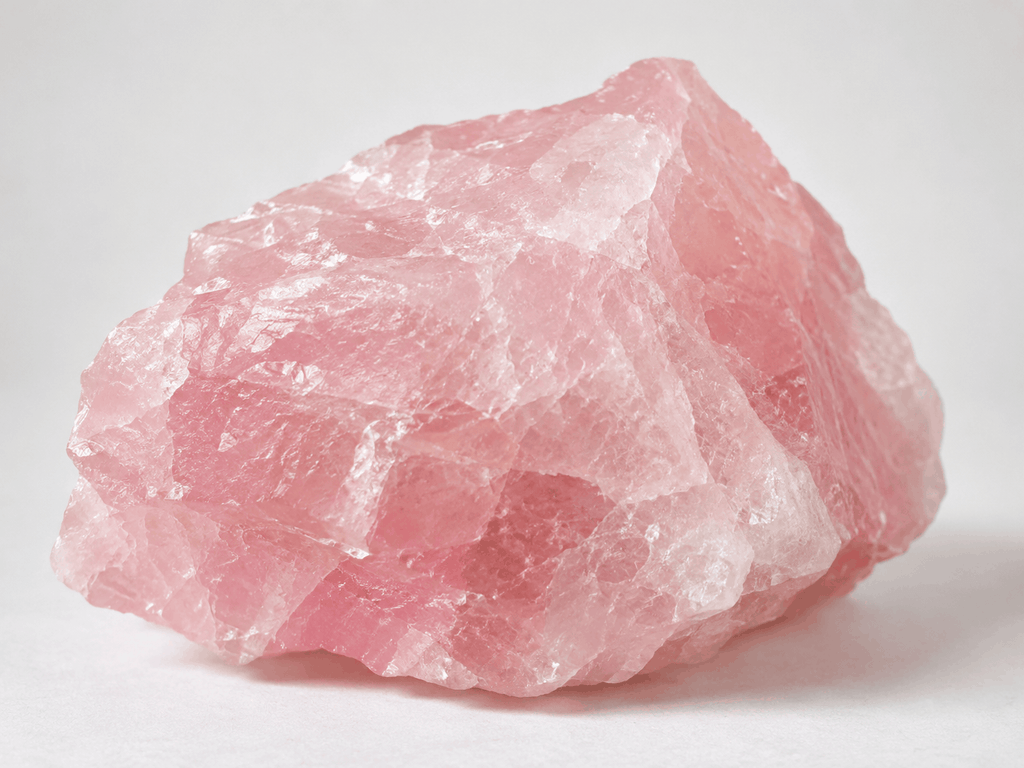
Most rose quartz has a cloudy or translucent appearance rather than being perfectly transparent. Its pink coloration is commonly associated with extremely fine mineral inclusions.
It is frequently carved into beads, spheres, hearts, and decorative objects.
Although rose quartz and amethyst may look related, their color differences are significant enough for gemologists to classify them as separate varieties of quartz.
Traditional spiritual meaning: Love, compassion, forgiveness, and emotional harmony.
5. Citrine (Yellow Quartz)
Citrine is a yellow to orange variety of quartz.
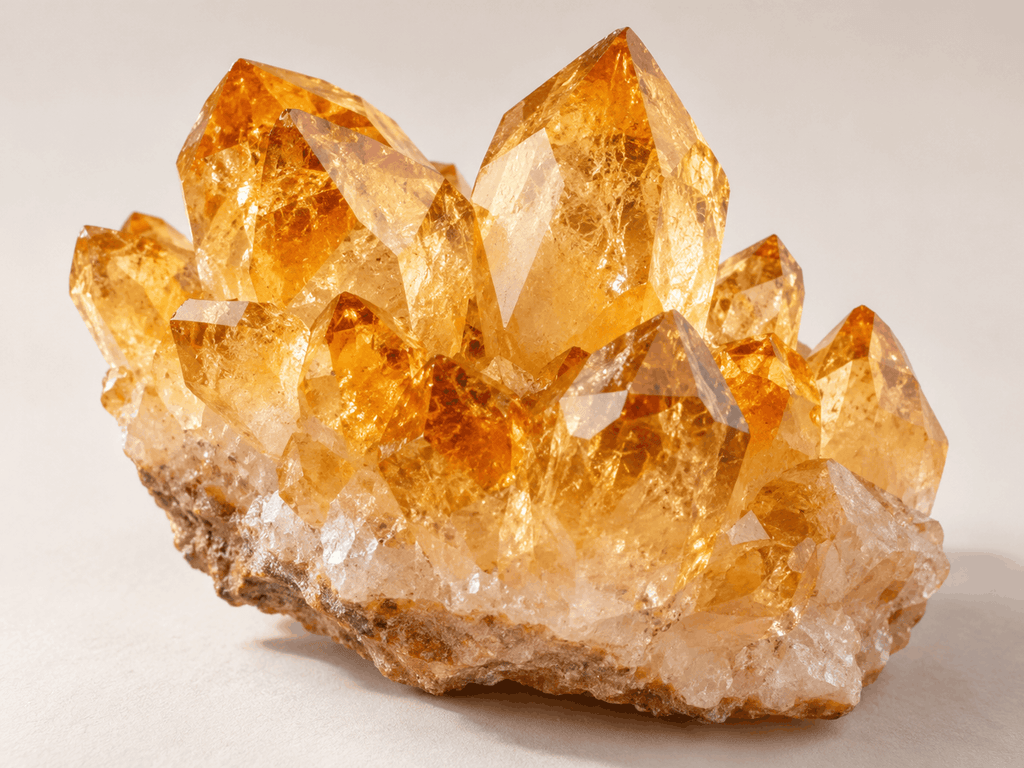
Its color ranges from pale golden yellow to deeper orange and reddish-orange shades.
Natural citrine is relatively uncommon. Much of the citrine sold commercially is produced by heating certain varieties of amethyst.
Heat treatment changes the stone’s appearance, although it remains quartz.
Traditional spiritual meaning: Prosperity, confidence, creativity, and abundance.
6. Smoky Quartz
Smoky quartz is a brown, grayish-brown, or almost black variety of quartz.
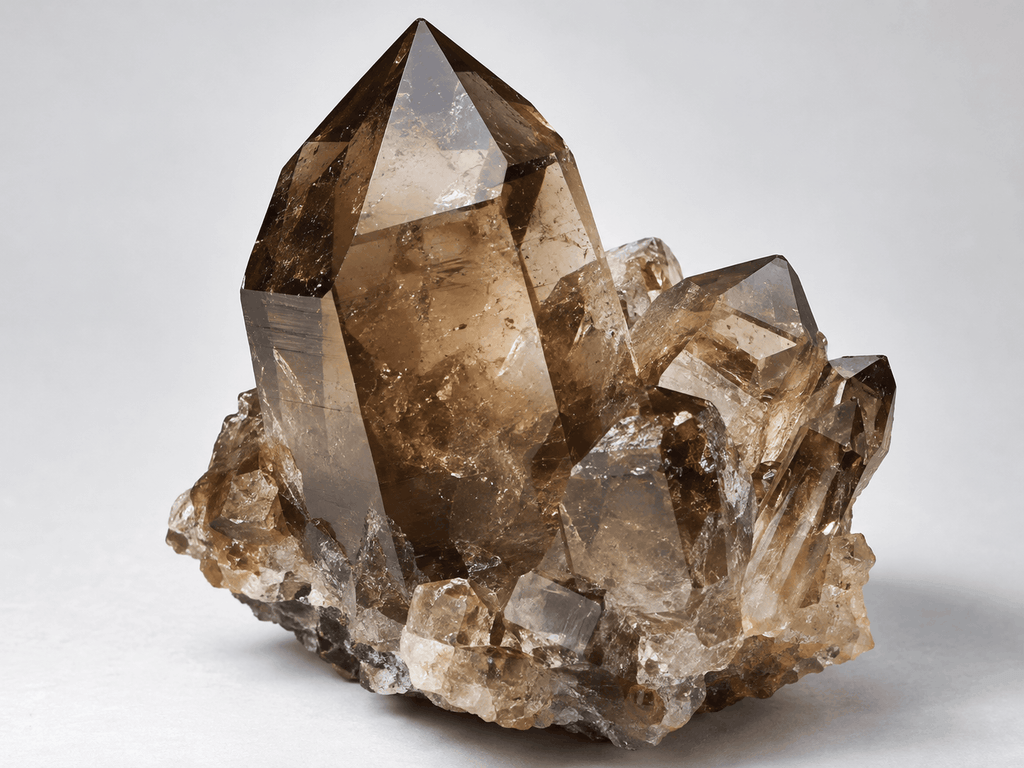
Its distinctive color develops through changes involving impurities and natural irradiation.
Some specimens are lightly tinted and almost transparent, while others are dark enough to appear black.
Traditional spiritual meaning: Grounding, protection, and stability.
7. Ametrine
Ametrine is an unusual quartz gemstone that combines purple and yellow or orange colors in a single stone.
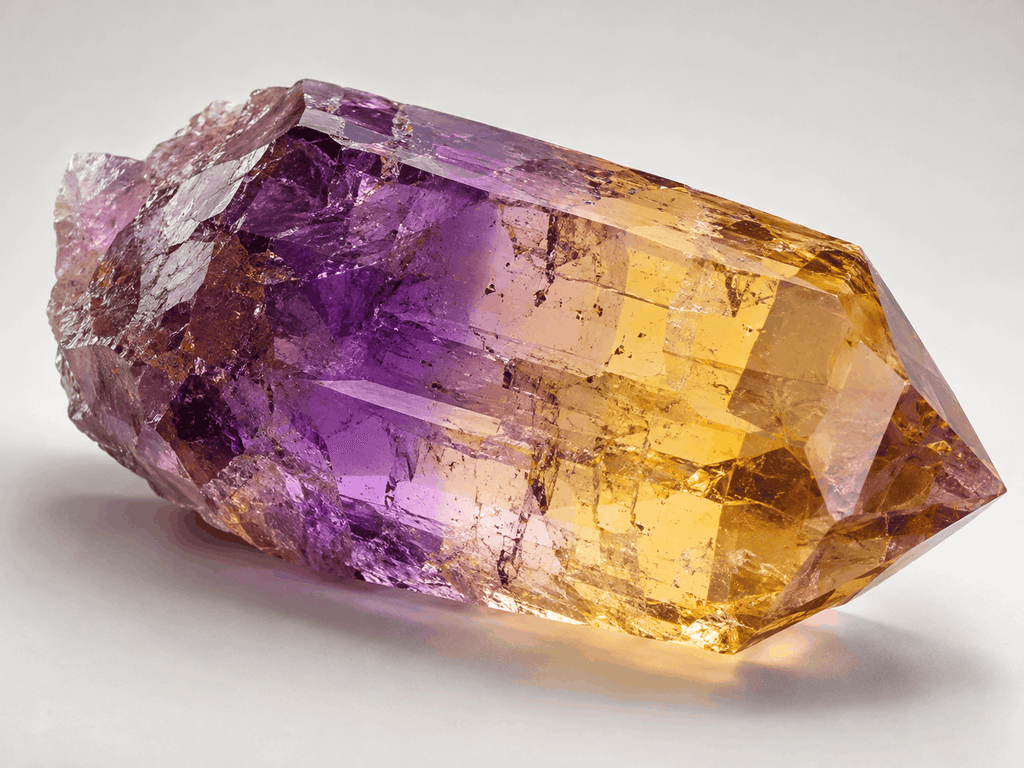
Its name comes from amethyst and citrine.
The two colors can appear as separate sections within the same crystal, making ametrine especially attractive when cut into gemstones.
Traditional spiritual meaning: Balance, creativity, and mental clarity.
Are All Gemstones Quartz?
No. Quartz is only one mineral species among many that are used as gemstones.
For example:
- Ruby and sapphire belong to the mineral family called corundum.
- Emerald and aquamarine are varieties of beryl.
- Garnet refers to a group of closely related minerals.
- Moonstone belongs to the feldspar group.
- Fluorite is a separate mineral known for its wide variety of colors.
- Selenite is a crystalline variety of gypsum.
A gemstone is generally a mineral or other material valued for its beauty, rarity, durability, or suitability for jewelry.
That means amethyst is both a quartz crystal and a gemstone, but a ruby is a gemstone that does not belong to the quartz family.
What Do Different Crystal Colors Mean Spiritually?
Throughout history, different cultures and spiritual traditions have associated colors and gemstones with particular qualities.
These meanings are symbolic rather than scientifically established properties of the stones.
| Crystal color | Common spiritual associations |
|---|---|
| White or clear | Purity, clarity, peace |
| Purple | Wisdom, intuition, spiritual awareness |
| Pink | Love, compassion, emotional healing |
| Yellow | Wealth, confidence, optimism |
| Green | Growth, harmony, renewal |
| Blue | Communication, calmness, truth |
| Black | Protection, grounding, stability |
| Red | Energy, passion, courage |
These associations vary between traditions. A particular crystal does not necessarily have the same meaning in every culture.
Do Crystals Really Have Healing Powers?
Crystals have a long history in religious practices, meditation, and personal rituals.
Some people believe that keeping a particular crystal nearby can encourage positive energy or improve emotional well-being.
However, there is no reliable scientific evidence that crystals possess special healing energies capable of treating diseases or changing a person’s financial circumstances.
That does not mean someone cannot find personal meaning in using them.
A crystal can serve as a reminder of an intention, become part of a meditation practice, or simply provide comfort through its appearance and symbolism.
The distinction is between the personal experience someone may have with a crystal and a scientifically demonstrated physical effect.
How Can You Identify a Natural Crystal?
Color alone is not enough to identify a crystal.
Several different minerals can have similar appearances. A white stone, for example, might be milky quartz, calcite, or another mineral altogether.
Mineralogists use characteristics such as hardness, crystal structure, cleavage, density, and optical properties to distinguish minerals.
Quartz measures 7 on the Mohs hardness scale, meaning it is relatively resistant to scratching.
However, a simple scratch test should not be treated as proof that a stone is genuine. Some imitation materials and other minerals can have similar properties.
If a gemstone is expensive, professional identification is more reliable than judging its color or appearance.
It is also worth asking whether the stone has been dyed, heated, irradiated, or grown in a laboratory.
A treated or laboratory-grown crystal is not necessarily worthless, but buyers should know what they are purchasing.
How Should Crystals Be Cleaned and Stored?
For many quartz gemstones, gentle cleaning with lukewarm water, mild soap, and a soft cloth is sufficient.
Avoid exposing amethyst to prolonged intense sunlight because some specimens may gradually lose color.
It is also advisable to store gemstones separately to prevent harder materials from scratching softer ones.
Not every crystal can tolerate water. Selenite, for example, is much softer and more water-sensitive than quartz.
For this reason, it is better to identify a crystal before trying saltwater cleansing, prolonged soaking, or other popular cleaning methods.
Final Thoughts
The world of crystals is far more varied than it first appears.
A white quartz crystal, a purple amethyst, and a pink rose quartz may look completely different, yet all three belong to the same mineral family.
Other gemstones, such as ruby, sapphire, and emerald, have different chemical compositions and geological origins.
Learning these differences helps us appreciate crystals beyond their appearance.
Whether someone is interested in mineral science, traditional symbolism, jewelry, or the simple beauty of natural stones, each crystal has its own geological story.
And sometimes, knowing how a crystal formed deep within the Earth is just as fascinating as the meanings people have given it.

